Contact Information
Office: 730 Barrows
E-Mail: gsilver@berkeley.edu
Phone: 609-258-2795
Alternate phone: 510-642-4683
Fax: 609-258-0922
Office Hours: 2010-2011 / On Leave of Absence
People in the Department
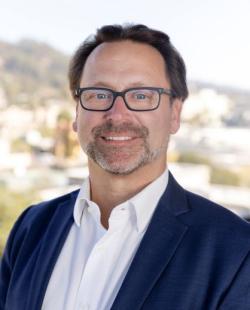
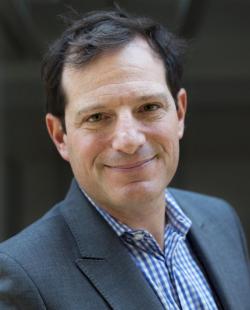
Gordon Silverstein
Assistant Professor
Groups: American Politics, Public Law & Jurisprudence
Gordon Silverstein is on leave for the 2010-2011 academic year at Princeton University where he is a Fellow in the Program on Law & Public Affairs and a Visiting Assistant Professor in the Woodrow Wilson School of Public Affairs.
Silverstein’s most recent book, Law’s Allure: How Law Shapes, Constrains, Saves and Kills Politics was published by Cambridge University Press in February, 2009 and won the C. Herman Pritchett Prize for the best book published in the field of law and courts in 2009 from the Law & Courts Section of the American Political Science Association.

Using more than ten primary case studies, ranging from abortion and poverty to campaign finance, war powers, environmental regulation, campaign finance reform and tobacco-control policy, Law’s Allure draws a roadmap to help politicians, litigators, judges, policy advocates, and those who study them understand the motives and incentives that encourage efforts to legalize, formalize, and judicialize the political process and American public policy, as well as the risks and rewards these choices can generate.
In his first book, Imbalance of Powers: Constitutional Interpretation and the Making of American Foreign Policy (Oxford University Press, 1997) Silverstein tried to explain why efforts by Congress to reign in executive power in the wake of the Vietnam war and Watergate. The book argues that although it is unrealistic to expect members of Congress or the Supreme Court Justices to change their behavior, either toward the executive branch or toward one other, it is in the President's best political interest to encourage a legislative role in foreign policy decisions. Demonstrating the importance of studying both the legal and political process, and the ways in which they influence each other, the book contends that an understanding of American foreign policy requires an awareness of the way in which constitutional interpretation shapes and constrains foreign policy decisions.
In addition to his work in American constitutional law, foreign policy and American political thought, he is now engaged in research on comparative constitutionalism and the rule of law. Together with Malcolm M. Feeley, Robert A. Kagan and Martin Shapiro, he organized an international, cross-disciplinary Sawyer Seminar series sponsored by a major grant from the Andrew W. Mellon Foundation on the “The Dilemmas of Judicial Power: Courts, Politics and Society" to be held at Berkeley’s Center for the Study of Law and Society in 2007-2008. His work on comparative constitutionalism is reflected in “Singapore: The Exception that Proves Rules Matter” a chapter in Rule By Law: The Politics of Courts in Authoritarian Regimes, edited by Tom Ginsburg and Tamir Moustafa (Cambridge University Press, 2008). Previously, he published an article titled "Globalization and the Rule of Law: 'A Machine that Runs of Itself?' " in ICON: The International Journal of Constitutional Law. Another article, “Sequencing the DNA of Comparative Constitutionalism: A Thought Experiment” appeared in the Maryland Law Review in 2006. This work is part of a larger research agenda aimed at developing a cross-institutional theory of precedent and a comparative study of the forces that drive different nations to adopt and accept judicial review.
More recently, he published an article titled "Bush, Cheney and the Separation of Powers: A Lasting Legal Legacy? in Presidential Studies Quarterly as well as an article co-authored with John Hanley, a Berkeley PhD student, which appears in the Hastings Law Journal titled "The Supreme Court and Public Opinion in Times of War and Crisis.
Other publications include a chapter on The Warren Court and Congress in Harry Schieber (editor), Earl Warren and the Warren Court (2007), and “Constitutional Contortion? Making Unfettered War Powers Compatible with Limited Government” in Constitutional Commentary, and “Statutory Interpretation and the Balance of Institutional Power in The Review of Politics.” His writing also has appeared in The Washington Monthly, The New Republic, the American Prospect and The Los Angeles Times.
Following his undergraduate education at Cornell University where he served as Editor-in-Chief of the financially and editorially independent Cornell Daily Sun, Silverstein worked as a journalist for The Wall Street Journal in New York and Hong Kong and The San Francisco Chronicle before going to Harvard University where he earned his PhD. Before moving to Berkeley, Silverstein held faculty positions in political science, law and administrative science at Rice University, Dartmouth College, the University of Minnesota and Lewis & Clark College. In addition, he served as a Program Director for the non-profit, non-partisan New America Foundation in Washington DC.
At Berkeley, Silverstein teaches graduate and undergraduate courses in public and constitutional law, civil liberties, comparative constitutionalism and the separation of powers among others.
Specialization
Constitutional Law, Separation of Powers, Comparative Constitutionalism, American Politics

Education
B.A., Cornell University, Ph.D., Harvard University